
Everyone talks about Delhi to Jim Corbett. Every travel blog, every tour package, and every itinerary template starts from Delhi. Which makes sense. Delhi is where most people are. But I live in Dehradun. And after doing the trip myself, I want to make a case that Jim Corbett from Dehradun is not just a different route; it is a genuinely better experience. It’s shorter, more scenic, less crowded, and it starts from a place that’s already in the mountains.
Let me tell you exactly what the journey looked like, why I think Dehradun has the edge, and what surprised me most about the whole trip.
The Distance Argument And Why It Actually Matters
Delhi to Jim Corbett is roughly 250–260 km depending on your exact route. That’s a 5–6 hour drive, sometimes more if you leave at a bad time or hit Ghaziabad traffic at 6 AM, which you will.
Dehradun to Jim Corbett is about 174 km. Four hours on a good day, maybe four and a half if you stop for breakfast, which you should, and I’ll come to that.
That 80 km difference sounds modest on paper. In practice, it means arriving at 12:30 PM instead of 2:30 PM. It means a relaxed check-in instead of a rushed one. It means your first afternoon at Jim Corbett actually belongs to you, not to recovering from the drive.
We left Dehradun at 7 AM. Vijay and his family joined us and reached the resort by 12:30. Fed, checked in, and napping before most Delhi travelers had even hit the Moradabad bypass.
The Route Itself Is Part of the Experience
This is the part that nobody talks about when they describe Jim Corbett from Dehradun, and I think it’s the strongest argument for this route.
The road from Dehradun passes through Haridwar. And that, in itself, is something.
I’ve driven past Haridwar dozens of times, and I still find something calming about it. The Ganga. The ghats visible from the road. The specific kind of energy that a holy city has at 8 in the morning — not crowded yet, not loud yet. Just present.
We stopped about 12 km past Haridwar at a food mall for breakfast. Nothing fancy. Paratha, chai, and some time to stand outside and breathe non-city air. This kind of stop is what road trips are actually made of — not the destination, but the 20 minutes in between where everyone is relaxed and talking and not going anywhere in particular.
From Haridwar, the highway is clean and well-maintained. As you move toward Ramnagar, the landscape thickens. Trees get bigger. The sky opens up. That particular feeling of a city releasing its grip—you get it faster on this route than you do on the Delhi corridor, which stays urban for a long time before anything interesting happens.
The Narrow Road—Which Is Either Terrible or Wonderful Depending on Your Attitude
I want to be honest about this because most travel blogs skip it entirely.
About 20 km before the resort, after the Ramnagar diversion, the road changes dramatically. It becomes narrow. Very narrow. A canal runs parallel on one side, dense trees on the other. If a vehicle comes from the opposite direction—and they will—one of you is reversing.
The first time I drove it, I was gripping the door handle.
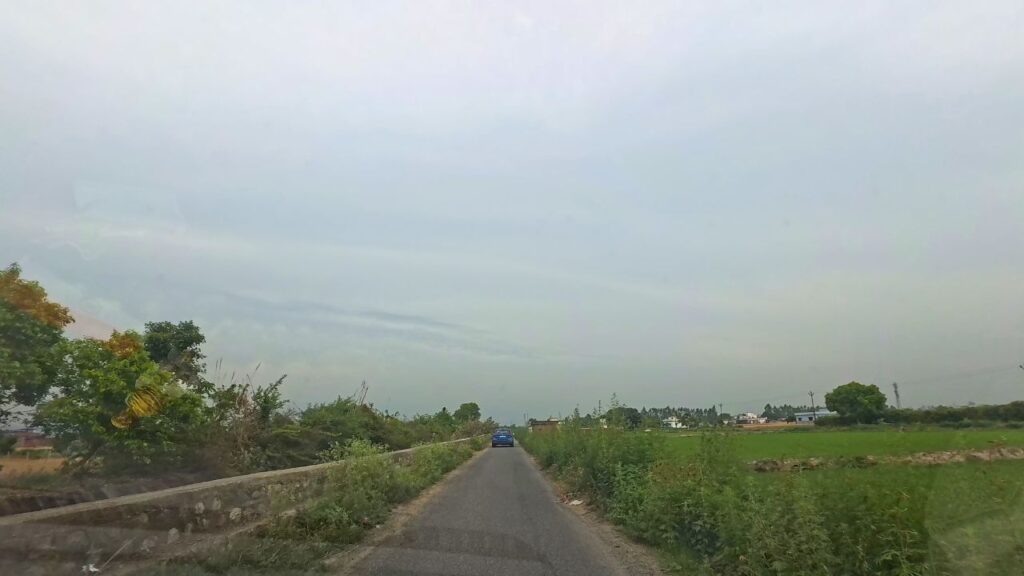
By the time I reached the resort, I had decided it was one of the better parts of the trip.
Here is why: that road is a natural filter. Anyone who made it down that road to get to their resort chose something over comfort. They drove slowly, paid attention, and arrived at Jim Corbett from Dehradun, having already left behind the kind of person who needs six lanes to feel safe. There is something about 20 minutes of careful, present, single-focus driving that prepares you for a place like Jim Corbett better than a smooth highway ever could.
If you are driving Jim Corbett from Dehradun, budget time for this stretch. Don’t rush it. It’s narrow, it’s bumpy in patches, and it is genuinely part of the experience.
Where We Stayed: Corbett Hidden Paradise
The resort was called Corbett Hidden Paradise, and I want to give it an honest review rather than a polished one.
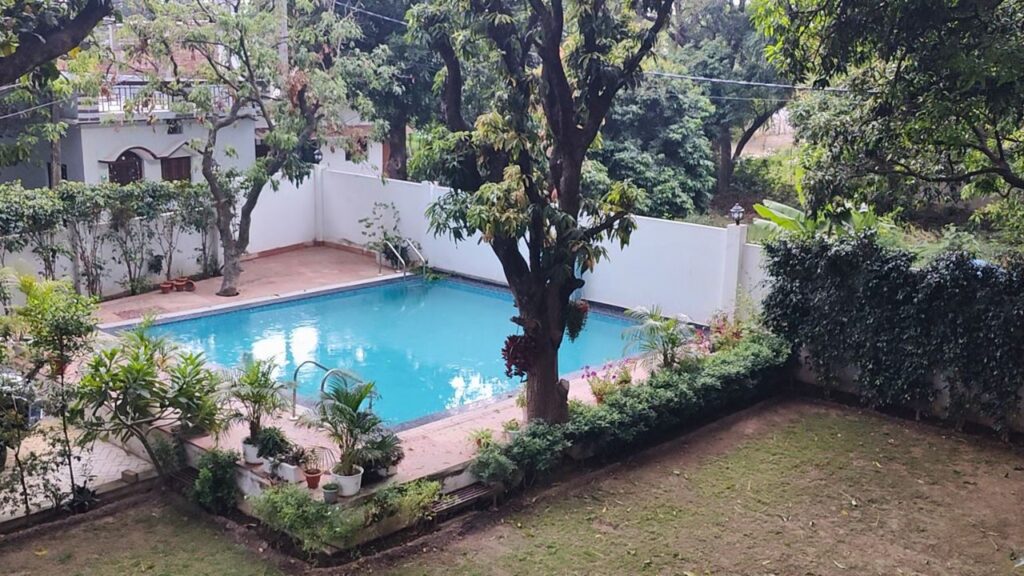
It is not a luxury property. The rooms are simple, clean, and functional. The views are trees, which are all you need. What it had, and what I didn’t expect, was genuine warmth from the staff. The hospitality wasn’t scripted. The lunch—dal, sabzi, and roti—was exactly what you want after five hours on the road. Not elaborate. Just good.
If you’re coming to Jim Corbett from Dehradun and looking for a mid-range stay that won’t disappoint on the things that actually matter, it’s worth considering.
We ate, we napped, and then we went looking for the rest of the afternoon.
Girija Devi Temple And What Happens When a Door Closes
The afternoon plan was Girija Devi Temple.
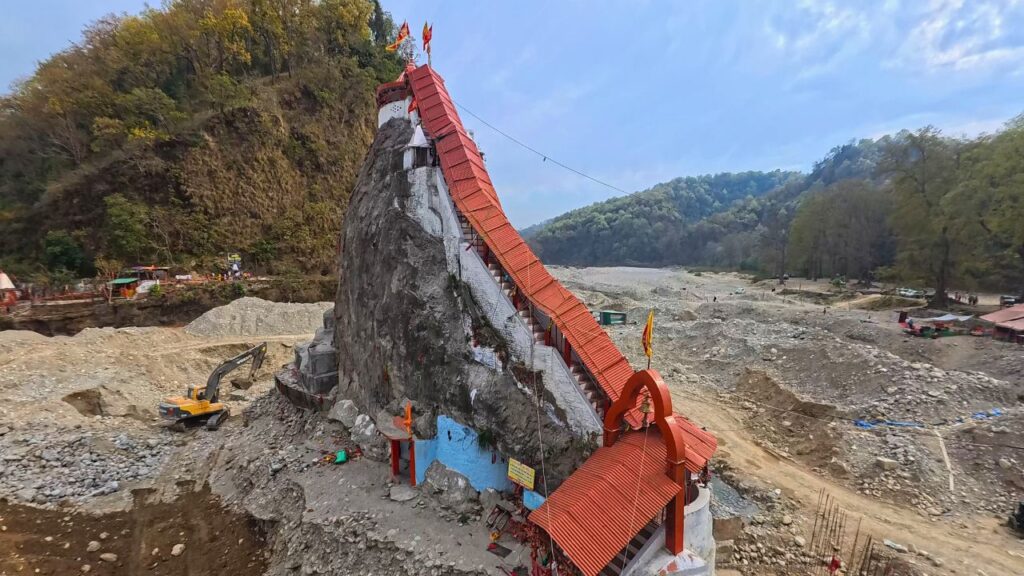
If you haven’t seen it, the setting is unlike anything in the region. The temple sits on top of a large boulder in the middle of the Kosi River. Not on the bank — in the river. The approach is across a walkway from the shore, and the boulder is high enough that the temple complex has its own commanding presence, surrounded by water on all sides with forest hills behind it.
The path was closed. Construction work. We couldn’t get to the temple itself.
I’d be lying if I said there was no disappointment. But we visited the other smaller temples in the complex, walked around the Kosi riverbank for a while, and sat with our feet near the water. And somewhere in those 20 quiet minutes—sun a bit strong, river moving steadily, not a plan in sight—I stopped thinking about what we’d missed.
The Kosi River near Girija Devi Temple is worth visiting even if the temple itself is shut. Take that for what it’s worth.
The Suspension Bridge: This One Genuinely Surprised Me
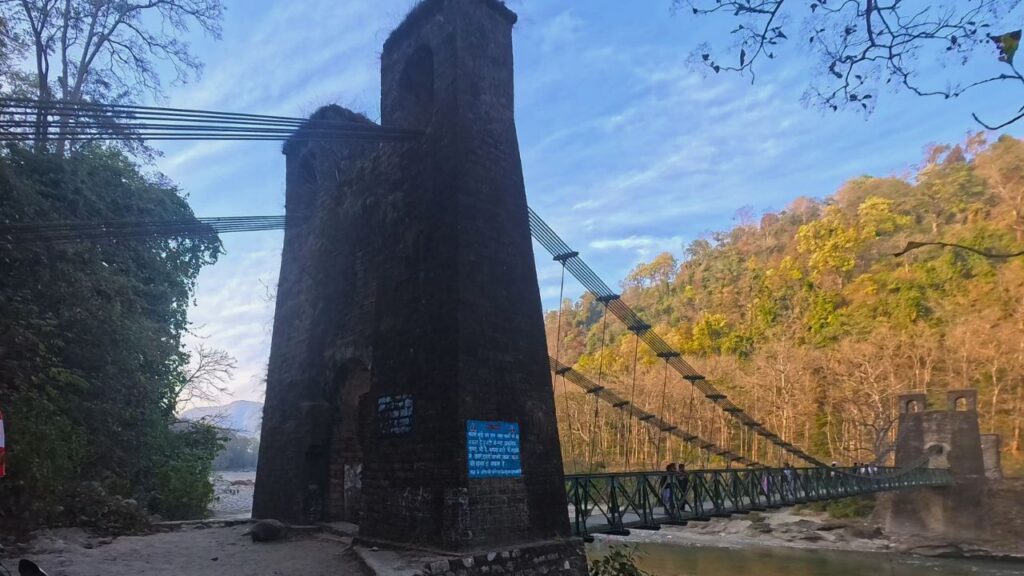
A few kilometers away was something I hadn’t read about in any Jim Corbett travel guide: a suspension bridge from the British era.
It looked, honestly, less like a bridge and more like a small fortification. Solid construction. Heavy. The kind of thing that says the British weren’t planning to leave anytime soon when they built it. We crossed it on foot, came out on the other side, and found ourselves at the rocky bank of the Kosi River.
No plan. No itinerary item. We sat on the rocks, took off our shoes, and put our feet in the water.
The Koshi was cold. The stones were smooth from years of water. The forest was on all sides. Nobody was rushing anywhere.
I’ve had expensive travel experiences that gave me less than those thirty minutes at that suspension bridge. It’s not in most Jim Corbett itineraries. It should be.
Why the Afternoon Matters More Than Most People Think
When you do Jim Corbett from Dehradun, you arrive with a full afternoon ahead of you. Most people planning a Delhi departure don’t factor in what they lose when they spend those afternoon hours in transit.
We used ours at the temple, by the river, and at the bridge. None of it was planned. All of it was good.
This is the practical advantage of the shorter route that nobody talks about: you don’t just save time, you gain time. And the time you gain is the relaxed, exploratory, unscheduled kind—which is the kind that actually becomes a memory.
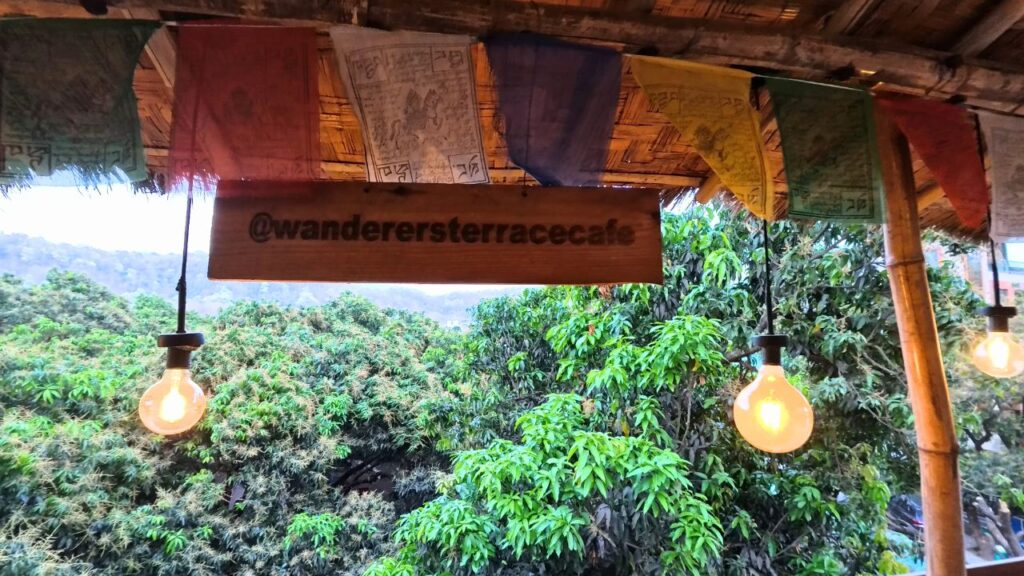
Wanderer’s Cafe—The Right Way to End a Day 1
Dinner was at Wanderer’s Cafe, a short drive from the resort. The name was enough to sell me before I even walked in.
The place had good evening energy. Indian and continental are on the menu—the combination that works when a group has mixed preferences. The food was solid, the ambience warm, and the conversation around the table had the particular ease of people who’ve been in a car together all day and have moved past making effort.
We drove back to the resort as it got dark. Outside the window is jungle. No streetlights. No traffic. Just trees and whatever was in them.
The Honest Comparison: Dehradun vs Delhi
I want to lay this out plainly rather than turn it into a listicle.
Distance: 174 km from Dehradun vs. 250+ km from Delhi. You save roughly 80 km and 1.5–2 hours each way.
Traffic: The Dehradun route via Haridwar is significantly less congested than the Delhi–Moradabad–Ramnagar corridor, especially on Friday evenings and Sunday afternoons.
Scenery: The Dehradun route passes through Haridwar and the foothills of Uttarakhand. The Delhi route is a highway for much of its length before things get interesting. The Dehradun approach is more scenic from the start.
Arrival time: If both parties leave at 7 AM, the Dehradun group arrives around 11:30–12:30. The Delhi group arrives at 1–2 PM on a good day, often later.
The afternoon: This is where Dehradun wins most clearly. An extra 1.5–2 hours in the afternoon at Jim Corbett is not nothing. That’s a temple visit, a river stop, and a walk across a 100-year-old bridge.
The road: The narrow canal road before the resort is the only thing that genuinely requires patience. It’s not dangerous, just slow. Build 45 minutes into your estimate for that last stretch.
One honest caveat: there’s no direct train from Dehradun to Ramnagar, so the road is your only real option. That’s not a problem if you’re driving but is worth knowing if you were hoping for a train journey.
What to Know Before You Go
A few practical things I wish someone had told me before this trip:
Start early. 7 AM departure from Dehradun is ideal. You’ll reach it comfortably before lunch, with energy left for the afternoon.
Stop at Haridwar. Even 15 minutes is worth it. The Ganga in the morning, a cup of chai—don’t just drive through.
The narrow road is real. After the Ramnagar diversion, the last 20 km to most resorts near the river runs on a very narrow road with a canal alongside. Low-clearance vehicles manage it, but go slow and don’t expect to make good time on this stretch.
Book safaris in advance. Core zone permits for Dhikala, Bijrani, and other main zones sell out weeks ahead during peak season (October–March). Last-minute bookings, as we found, will usually land you in the buffer zones. Which is fine — just know what you’re getting. Safari bookings can be done here.
The Girija Devi Temple access can vary. Check current conditions before visiting. When we went, the main path was closed for construction. The river area is worth stopping at regardless.
Wanderer’s Cafe for dinner. Good food, good vibe, easy to find. Don’t overthink the dinner decision.
The Part Nobody Puts in the Travel Guide
We were back at the resort by 9 PM on Day 1. I sat outside for a while before going in.
No city noise. No traffic. The jungle was making whatever noises jungles make at night — I couldn’t identify any of it, but it was constant and alive. And I thought about how I’d been living in Dehradun for three years, and this trip—this particular version of Jim Corbett from Dehradun—had taken me all of 5 hours to arrange and one free weekend to execute.
That’s the thing about living where I live. The access is extraordinary. Most people plan Jim Corbett from cities that require half a day of driving just to reach the point where things start getting interesting. From Dehradun, you’re in interesting territory almost from the first hour.
Day 2 had a waterfall. Day 3 had a jungle and a temple with a mythology that stopped me in my tracks. But that’s a different post.
This one was for the drive, the river, and the old bridge.
I enjoyed how this article balanced practical information with travel inspiration. Many blogs either become too promotional or too generic, but this one offered genuinely helpful guidance. The tips about preparation, local experiences, and making the most of limited travel time were especially valuable. Thank you for putting together such a useful resource.