
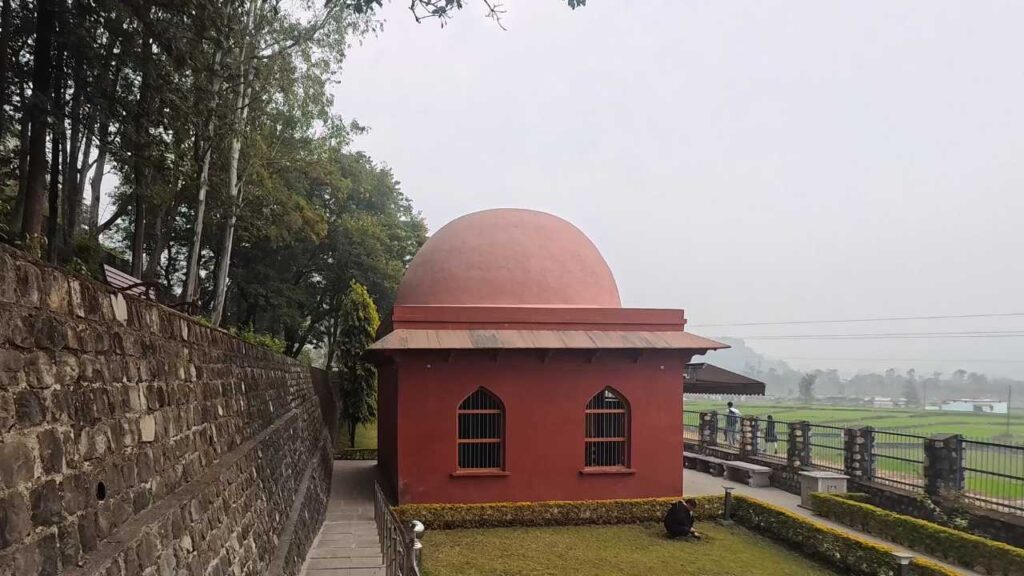
If you’re the kind of traveler who gets goosebumps around old stones and forgotten stories, Ashoka Rock Edict Kalsi will feel like a time machine more than a monument.
On our Chakrata–Dehradun road trip, this place wasn’t even the “main” destination. It was one of those detours you casually add to the map… and then end up thinking about for days. Standing in front of a 2,000‑year‑old message from an emperor who changed his heart after a brutal war hits very differently in real life than it does in a history textbook.
This is your ultimate, no‑nonsense guide to Ashoka Rock Edict Kalsi—what it is, what’s written on it, how to visit, and how to make the most of it as a history‑loving traveler.
What Exactly Is the Ashoka Rock Edict Kalsi?
Before we talk logistics and photos, let’s clear one thing: Ashoka Rock Edict Kalsi is not “just another old stone on the way to Chakrata.”
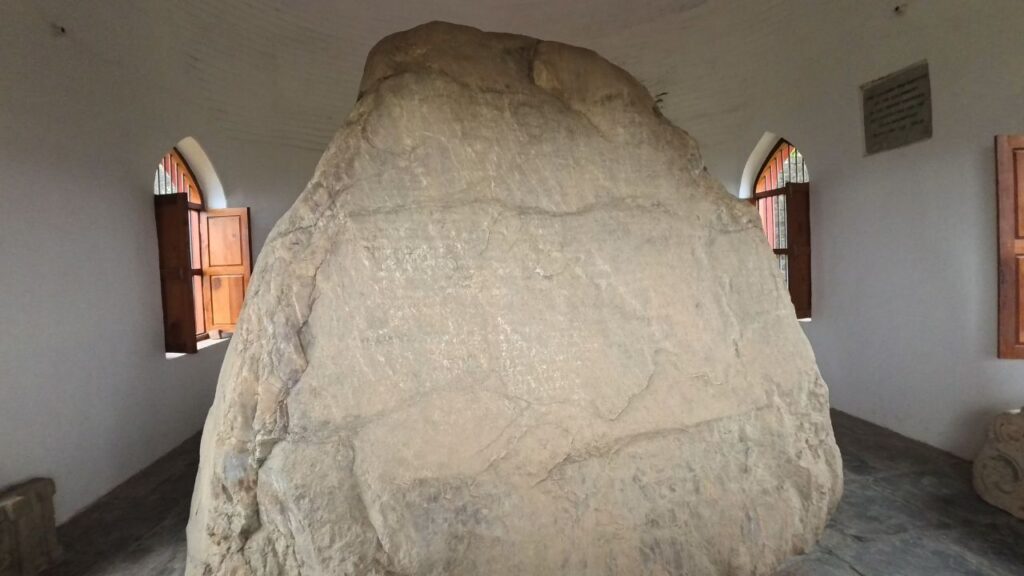
Kalsi is a small town between Dehradun and Chakrata, near Dakpathar, at the confluence of the Yamuna and Tons rivers. Inside a peaceful Archaeological Survey of India (ASI) compound, you’ll find a massive pear‑shaped quartz rock about 10 feet high and 8 feet wide, covered in ancient inscriptions.
This rock carries all fourteen of Ashoka’s Major Rock Edicts—which already makes it rare—and it is the only Major Rock Edict site in North India. That alone should make Ashoka Rock Edict Kalsi bucket‑list material for anyone who loves Indian history, archaeology, or epigraphy.
The inscriptions were carved around 250–253 BCE in the Prakrit language (often described as Pali/Magadhi) using the Brahmi script, during the reign of Mauryan emperor Ashoka.
The Story Behind Ashoka Rock Edict Kalsi
Let’s zoom out for a second.
Ashoka starts his career like most conquerors of his time—ambitious, ruthless, and hungry for territory. Then comes the Kalinga War, which leaves over a hundred thousand people dead and many more displaced, according to his records in the Major Rock Edicts. That bloodshed breaks something inside him.
After Kalinga, Ashoka changes from “conquest by the sword” to “conquest by Dhamma,” which means ruling with compassion, non-violence, and the well-being of his people. He doesn’t use speeches or PR teams to propagate this new way of thinking. He writes down his ideas on rocks and structures all throughout the subcontinent.
The Ashoka Rock Edict Kalsi is one of those communications that the emperor himself sent. Kalsi’s inscription includes Major Rock Edict XIII, where Ashoka explicitly expresses remorse over the suffering caused in Kalinga and talks about how even a fraction of such pain now feels unbearable to him.
So when you stand in front of Ashoka Rock Edict Kalsi, you’re not just “seeing an inscription.” You’re standing where an emperor publicly admitted regret and promised to do better. That’s powerful.
What Is Written on Ashoka Rock Edict Kalsi?
We obviously can’t copy the full text here, but let’s break down what the Major Rock Edicts here are actually about.
The fourteen edicts carved here talk about:
- Dhamma (moral law): Ashoka’s idea of an ethical life—kindness, self‑control, charity, respect for parents, good behavior toward servants, and fairness in everyday dealings.
- Non‑violence and compassion: Instructions to reduce animal slaughter, show mercy in punishments, and treat all living beings more gently.
- Religious tolerance: Clear appeals to respect all sects and avoid pointless criticism of other beliefs, something that feels surprisingly modern.
- Administrative responsibility: Orders to officers to travel, listen to people, resolve complaints fairly, and focus on welfare rather than fear.
- Kalinga remorse (Edict XIII): Ashoka counts the people killed, dead, or deported in Kalinga and says that even if a hundredth or thousandth of such suffering happened now, it would still weigh heavily on him.
- Global reach: The same edict mentions contemporary Hellenistic kings like Antiochos, Ptolemy, Antigonos, Magas, and Alexander, showing that Ashoka knew exactly who ruled in the Greek world and how far his influence could travel.
On the main east face of Ashoka Rock Edict Kalsi, you get Edicts 1–12 and part of 13; the rest wraps around the sides, along with an engraved elephant (labelled Gajatama in Brahmi) that adds a beautiful visual touch.
So, in everyday language, Ashoka Rock Edict Kalsi is a 10‑foot stone where a king publicly wrote, “I was wrong, I hurt people, and I want to rule differently now.” How often do you see that level of vulnerability carved in stone?
Why Ashoka Rock Edict Kalsi Is a Goldmine for History Lovers
If you’re wondering whether this place is worth a detour when you’re already tired from a hill drive, here’s why I’d say “yes” without thinking twice.
1. It’s the only Major Rock Edict in North India
Multiple sources confirm that Ashoka Rock Edict Kalsi is the sole site in North India with the full set of Major Rock Edicts. You’re literally reading the same text that appears in a handful of places across the country—but here, it’s in an easily accessible town between two popular hill destinations.
2. It’s a perfect mix of nature and history
Kalsi sits near the confluence of the Yamuna and Tons rivers and is often described as a peaceful village with ancient monuments, picnic spots, and easy access to the Jaunsar‑Bawar region. That means you can combine your visit to Ashoka Rock Edict Kalsi with riverside walks, short drives, and quiet tea breaks.
3. It’s incredibly accessible and free
Unlike many big-ticket historical sites, entry to this place is currently free, and the ASI‑maintained gardens give it a relaxed, open feel. For budget travelers, students, and families, this is one of the easiest heritage experiences to add to a Dehradun or Chakrata itinerary.
4. It reveals the human side of an emperor
Most monuments celebrate victories; Ashoka Rock Edict Kalsi quietly documents regret and change. Edict XIII’s Kalinga passage is central to how historians date Ashoka’s reign and understand his transformation. That makes this rock a key primary source, not just a sightseeing spot.
How to Reach Ashoka Rock Edict Kalsi
If you’re planning your own “unravel travel” route, this place fits beautifully into a Chakrata–Dehradun loop.
- From Dehradun: Kalsi is roughly 44–50 km away, depending on your starting point in the city, via Herbertpur and Vikasnagar. Expect around 1.5 hours by car, more if you stop for chai (which you absolutely should).
- From Chakrata: The distance is around 43 km, making it a natural stop when you’re driving down from the hills.
- By public transport: Local buses and shared jeeps run between Dehradun, Herbertpur, Vikasnagar, Kalsi, and Chakrata. You may need to change at Vikasnagar or Herbertpur, but the connections are manageable if you’re used to hill travel.
The entrance lane to Ashoka Rock Edict Kalsi turns off near the end of the main Kalsi market. One detailed travel account mentions that the actual site is about 200 meters from the entrance gate and that you can even drive your car down the internal slope with a bit of caution.
Timings, Entry and Practical Tips
Many people miss Ashoka Rock Edict Kalsi simply because they don’t know the basics. Here’s the quick version:
- Timings: Most guides list the site as open roughly from 8:00 am to 5:00 or 6:00 pm, all days of the week, with ASI‑style timings.
- Entry fee: Current listings indicate no ticket is required—entry is free.
- Management: The site is maintained by the Archaeological Survey of India and has a protective dome/gazebo over the rock, plus small gardens around it.
- Footwear: The area is compact, but comfortable shoes help if you want to explore nearby viewpoints or walk around Kalsi town.
Always double‑check timings locally or via recent reviews before your trip, as rules and schedules can change.
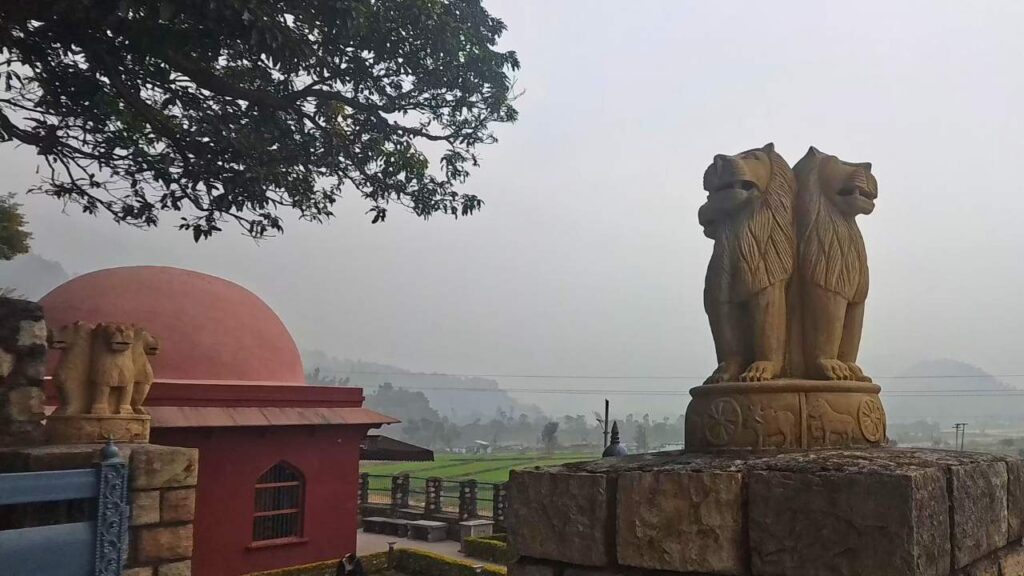
What to See at Ashoka Rock Edict Kalsi
Once you enter the ASI compound, don’t rush straight to the rock, click two photos, and leave. Ashoka Rock Edict Kalsi rewards slow travelers. Here’s what to focus on:
The Main Inscribed Rock
This is the star of the show.
All fourteen Major Rock Edicts, written in Prakrit and Brahmi script, wrap around the massive stone. On the main face, you’ll see the bulk of the text, and as you move around, you can trace how the inscription continues along the sides. Even if you can’t read Brahmi, just standing close and noticing the depth and evenness of the carving is impressive.
The Engraved Elephant
Near one side of the Ashoka Rock Edict in Kalsi, there’s an engraved elephant, often highlighted as one of the site’s unique visual motifs. The accompanying word in Brahmi, Gajatama, is sometimes translated as “supreme elephant” or left as an open question.
For a history lover, that little elephant becomes a whole rabbit hole of symbolism—power, wisdom, royal identity, and even connections to Buddhist imagery.
ASI Gardens and Setting
The small but well-kept lawns and flower beds make Ashoka Rock Edict Kalsi surprisingly photogenic, especially in softer morning or evening light. You don’t need hours here, but 30–45 minutes gives you enough time to read the information boards, walk around, and simply sit in the quiet.
Information Boards and Local Stories
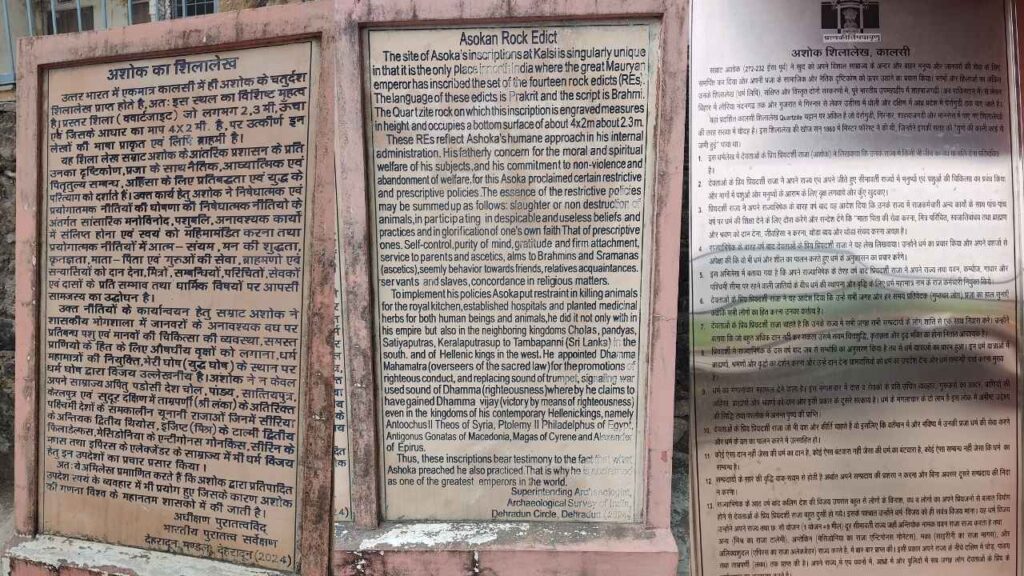
Most visitors just skim the English or Hindi boards. If you slow down and actually read them, they give timelines, discovery details (John Forrest is often credited with bringing the site to wider attention in the 19th century), and basic explanations of Ashoka’s Dhamma.
If you’re lucky, a local guard or guide might share small stories—how many people come, what school kids ask, or how often people drive past without knowing what’s inside that gate.
How Much Time Do You Need at Ashoka Rock Edict Kalsi?
Short answer: 30–60 minutes is enough for most travelers.
But if you’re the sort who likes to:
- read every board,
- walk the perimeter slowly,
- imagine the carving process,
- and maybe journal a bit under a tree,
you can easily stretch into a 90‑minute reflective stop. It’s one of those rare places where you don’t need a packed “itinerary”—just curiosity and a bit of time.
Tips to Experience Ashoka Rock Edict Kalsi the “Unravel Travel” Way
If you’re here as a history lover and not just a checklist tourist, try these:
- Visit in softer light. Morning or late afternoon makes the rock, gardens, and surrounding hills look more dramatic and also helps you photograph the inscriptions without harsh glare.
- Carry a quick primer. Save a short summary of Ashoka’s life and the Major Rock Edicts on your phone. Reading it while standing here hits differently than reading at home.
- Pair it with a river stop. Spend some time near the Yamuna/Tons confluence either before or after; it creates a pleasing contrast between natural and historical stillness.
- Talk to locals. Ask a chai stall owner or shopkeeper what they think of the rock. Some will shrug; some will tell you how “even Dehradun people don’t know about it.” Those casual comments say a lot about how we treat heritage.
- Use it as a reflection point. Ashoka went from a ruthless conqueror to someone who publicly carved his remorse. While you’re here, ask yourself, “Where have you changed your mind?” What would your “rock edict” say?
Who Should Definitely Visit the Ashoka Rock Edict at Kalsi?
You’ll love Ashoka Rock Edict if:
- You underlined your history textbooks as a kid.
- You enjoy sites like Sarnath, Sanchi, or Ajanta more than crowded malls.
- You prefer slow, meaningful stops over rushed sightseeing.
- You’re doing a Dehradun–Chakrata loop and want at least one “mindful” halt between tea and viewpoints.
For purely “selfie + view” travelers, Ashoka Rock Edict Kalsi might feel a bit underwhelming. There’s no massive fort, no flashy temple. It’s simple, quiet, and powerful in a very different way