
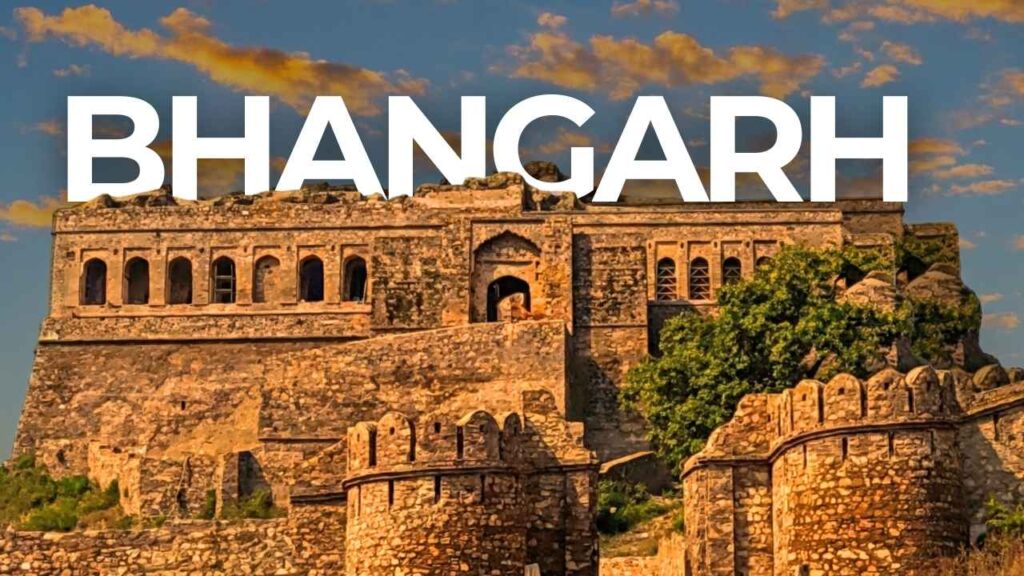
I didn’t sleep well the night before I left for Bhangarh Fort. Not because I was scared of ghosts, but because I was set on finding the truth.
For years, I had seen the headlines that got people to click. “The fort in India that has the most ghosts.” “Place with a curse where ghosts come to life at night.” “The government officially says you can’t enter after dark.” The story was so consistent and widespread that it seemed like it was true. But there was something about it that didn’t feel right to me.
That is why I went there. What I found wasn’t paranormal at all; it was something much more intriguing.
The Legend of bhangarh fort That Built an Empire (Except for the Fort)
Let me start with the ghost stories, like most people do.
Two primary curses make up the story of Bhangarh Fort. The first story is about Guru Balu Nath, a saint who is meditating on the hill. Raja Madho Singh intended to build the fort in 1600, but he had to seek permission first. The only condition was that the fort’s shadow could never fall on the sage’s meditation hut. The king said yes. But Ajab Singh, who took over, was very ambitious. He wanted to grow, construct taller, and make the fort easier to see. The gloom finally fell. The story goes that the sage cursed the fort to never be inhabited again.
Princess Ratnavati is the subject of the second curse. A sorcerer became obsessed with Princess Ratnavati and used a perfume bottle to cast a spell on her. Ratnavati was smart; she broke the bottle, and the magic went wrong, killing the sorcerer. But he cursed them all before he died. She perished in battle a year later. The fort was lost.
What’s the problem? These stories are just too good. They’re story arcs meant to keep people interested, not to record history.
The Real History (Which is More Interesting)
Historians are sure of this:
Raja Bhagwant Das erected Bhangarh Fort in 1573 for his younger brother Madho Singh. It wasn’t just a fort; it was a planned city with 9,000 dwellings, temples, bazaars, and a complicated social order. Think of it like Bangalore in the Middle Ages. The Gopinath Temple is still there. The Mangla Devi Temple is still there. Five strategic gates—Lahori, Ajmeri, Phulbari, Delhi, and Hanuman—show how advanced the military was.
It did well for almost 150 years. Maharaja Jai Singh II of Jaipur then attacked and took over in 1720. The kingdom got weaker. People started to leave slowly, not because of curses, but because life was getting harder.
In 1783, the main blow came. The Chalisa famine spread across North India, killing an estimated 11 million people in the area. There were no people left in Bhangarh. Families moved to obtain food and water. The city was never moved again. It turned into a ghost town, which means that no one lived there. Not because it was haunted by spirits.
This is what really happened. And it’s a lot more captivating than any ghost story.
The Government Notice: A Great Way to Market
This is when the story gets fascinating. If you go to Bhangarh Fort now, you’ll see an official Archaeological Survey of India sign. It says clearly: The site is off-limits from sunset to morning.
People think the ban is because of ghosts. It’s a fair guess, especially since the story about ghosts has been going around for decades.
But when I talked to local guides, the conversation went like this:
Me: “Why can’t you go in at night?”
Guide: (sighs) “Because of the ghosts.”
Me: “But really, why?”
Guide: “The truth is that it’s wildlife. There is a tiger reserve close by. Leopards. They are dangerous and only come out at night.
That moment changed everything for me.
Bhangarh Fort is around 27 kilometers from Sariska Tiger Reserve, which is one of India’s designated tiger habitats. The Royal Bengal tiger, Indian leopard, sloth bear, striped hyena, golden jackal, caracal, and many other animals that are active at night live in the reserve. Leopards are especially aggressive hunters at night. They don’t care what kind of prey they are.
The ASI could have just put up a sign that said, “Warning: Wildlife danger.” No admittance after dark.
They allowed the “haunted” story to go on instead. Because ghosts bring in visitors. But wildlife warnings don’t.
The Real Economics: How Myths Make Money
I want to be clear: I don’t blame the people who live there. Their story isn’t only a lie; it’s also smart from a business perspective.
Alwar is a district that is not very well known, and Bhangarh is in it. Before the “haunted fort” brand became popular, it was just another old ruin. Every year, thousands of tourists come to see it. For guides, food sellers, hotel owners, and store owners, that’s money.
The ghostly story is a feature, not a bug. It’s a smart way to market.
But the scams I saw? That’s a whole other story.
The Real Scams That Bhangarh fort Is Known For
I got to the fort’s entrance at about 10:00 AM. A guide came up to me in two minutes.
Guide: “Beta, the fort is incredibly huge. You won’t get it by yourself. I’ll show you everything. “400 rupees.”
I didn’t care. I began to walk.
“Okay, okay, 300 rupees,” ten meters later.
“200!” twenty meters later
“100! Just 100!” at fifty meters
I really did say yes at 100 rupees, keen to know what I would get for that price.
I got a kid who was 10 years old. That was all. There was no real guide, only a kid who was meant to show the way and tell stories that everyone already knew. The boy stuck out his hand at the end of the fort tour and said, “Rs. 100.”
I had been cheated twice. By the same plan.
But what bothered me the most was that the scheme wasn’t a one-time hoax. This was a plan. It was a gadget that took money from tourists and taught a child how to lie.
The people who sold food did the same thing. A plate of chana jor garam (roasted chickpeas) cost 50 rupees, but there weren’t many chickpeas—mostly onions and tomatoes. A normal soda? 150 rupees. That same soda costs 30 to 40 rupees in Mumbai or Delhi.
Visitors weren’t told ahead of time that the fort was also undergoing major repairs. So people came hoping to see beautiful ruins, but they saw construction cranes instead.
Why the Night Entry Ban at bhangarh fort is a Good Idea
The government’s rule against entering at night isn’t just paranoia. This is why it’s really okay:
Wildlife Risk: The Sariska Tiger Reserve is home to leopards, hyenas, and caracals who hunt at night. A person who is lost in the dark might seem like food.
Dangerous Structure: The fort’s structures without roofs are not stable. The chance of falls and injuries is way up when there is no illumination.
Crowd Control: It’s easier to keep tourists safe while the sun is up and the hours are controlled.
Conservation: The Aravalli hills around the fort are important for the environment. Nighttime limitations help keep wildlife routes safe.
But saying “Wildlife danger” doesn’t sell as many tickets as saying “India’s most haunted fort, so scary that the government had to ban entry.”
The Actual Truth Behind the Myth
There are no ghosts in Bhangarh Fort. There are stories that haunt it. Stories made to help the economy. And there’s nothing strange about that; it’s just human.
Does that mean it’s wrong? Yes, it’s morally complicated. However, this complexity is not unusual.
Every place that tourists go has a story. Morocco is known for its “exotic mysticism,” Bali for its “spiritual paradise,” and Thailand for its “adventure and freedom.” These stories determine the travelers who come, where they spend their money, and how long they stay.
The story of Bhangarh is just more dramatic than most.
What This Means for You (If You Want to Go to bhangarh fort)
This is what I really think:
Yes, go to Bhangarh Fort. The remains of the buildings are really spectacular. The Gopinath Temple is quite lovely. The Aravalli scenery is really beautiful. The past is real, but the ghost isn’t.
But be smart when you go:
During the day, and bring a good camera. The fort looks good in pictures.
Don’t bother with the guides unless you want one. If you do, agree on a price ahead of time. Don’t let it go from 400 to 100 rupees. That math doesn’t add up.
Bring your own food, or be ready to pay a lot for it.
Read the history first so you know what you’re looking at. When the stories are based on real events, they are more interesting.
Don’t go in at night, not because of ghosts but because of leopards. Real peril is worse than peril that is otherworldly.
If you want to know more, talk to the locals, but know why they want to help you. They need to pay their expenses.
The Bigger Lesson
The scams and the bogus story are not what bother me most about Bhangarh. It’s how quickly we believe stories when we hear them over and over.
We want to believe in the unknown. We want venues to have different levels. A fort that is only important in history seems dull. But a fort that is haunted? That’s a narrative that makes the 400-kilometer trip worth it.
The truth is more complicated, but it doesn’t look as appealing on Instagram. It’s about the past getting worse, money, protecting animals, and how people think. It’s about figuring out why some stories are kept alive by communities and whether the money made from tourism is worth the lies.
When I say “Unravel Travel,” I mean not simply going to destinations but also getting to know them. Going beyond the headline. Having conversations with people who live there. We respect both their way of life and our right to know the truth.
There are no ghosts in Bhangarh Fort. But that’s what makes it more captivating.
The main point
Bhangarh Fort is a genuine place. The history is real. It really is beautiful. The spirits? They are a marketing plan, and to be honest, it’s a fairly smart one. Knowing that doesn’t make the fort any less interesting to see. It just makes you a better traveler.
Smart travelers make meaningful connections, help communities in a responsible way, and come home with tales that matter.
That’s the kind of trip I believe in.
Have you been to Bhangarh? How did it go for you? Please leave a remark below. I’d love to hear what you think about the haunting story versus the genuine story.
Also don’t forget to watch my vlog on Bhangarh Fort –