
The alarm went off at 5:30 AM.
Outside is dark. The kind of dark that only exists when there are no streetlights, no traffic, no city doing its background hum. Just the jungle, whatever was in it, and the quiet that forests keep at that hour.
I lay still for about thirty seconds—the brief negotiation between the person who set the alarm and the person who has to actually get up—and then swung my legs off the bed.
Safari morning. Jim Corbett. This is the reason most people make this trip.
And I want to be straight with you from the first paragraph: we didn’t see a tiger. We were in the Sitabani zone at Jim Corbett — the buffer zone, not the core reserve — and the tiger didn’t show up. This post is not going to tell you we saw one anyway or that it was secretly fine. It’s going to tell you exactly what three hours in that jungle was like, what the zone actually offers, and who should go and who probably shouldn’t.
That’s the honest truth this title promises. Here it is.
How We Ended Up at Sitabani Zone Safari
The short version: last-minute booking.
We had planned to book a safari in one of the core zones—Bijrani or Dhikala—where tiger sighting probabilities are meaningfully higher. What I didn’t account for was how far in advance those permits get snapped up. Core zone bookings for peak season can require four to six weeks of advance planning. We were working for about four days.
The Sitabani zone at Jim Corbett operates differently. It’s a buffer zone managed by the Forest Department rather than the Corbett Tiger Reserve Authority. No CTR permit required. Flexible entry. Available when everything else is full.
So, Sitabani zone safari it was.
I want to address the TripAdvisor reviews before we go any further, because if you’ve done any research on this zone, you’ve seen them. “Complete waste of time.” “Not even part of the real park.” “Saw nothing.” These reviews exist, they’re genuinely held opinions, and they’re not entirely wrong. They’re also not the complete picture. I’ll come back to this.
What Sitabani Zone Safari Actually Is
Most Jim Corbett content treats Sitabani as a consolation prize—the zone you get when you couldn’t get into the real zones. That framing is both understandable and unfair.
The Sitabani zone is a forested buffer area adjacent to Jim Corbett National Park, near Ramnagar. It’s dense, it’s a real jungle, and it’s been a significant wildlife corridor for decades. The forest here is thick enough that visibility is limited—which is part of why tiger sightings are rare, but also part of why the atmosphere is genuinely wild.
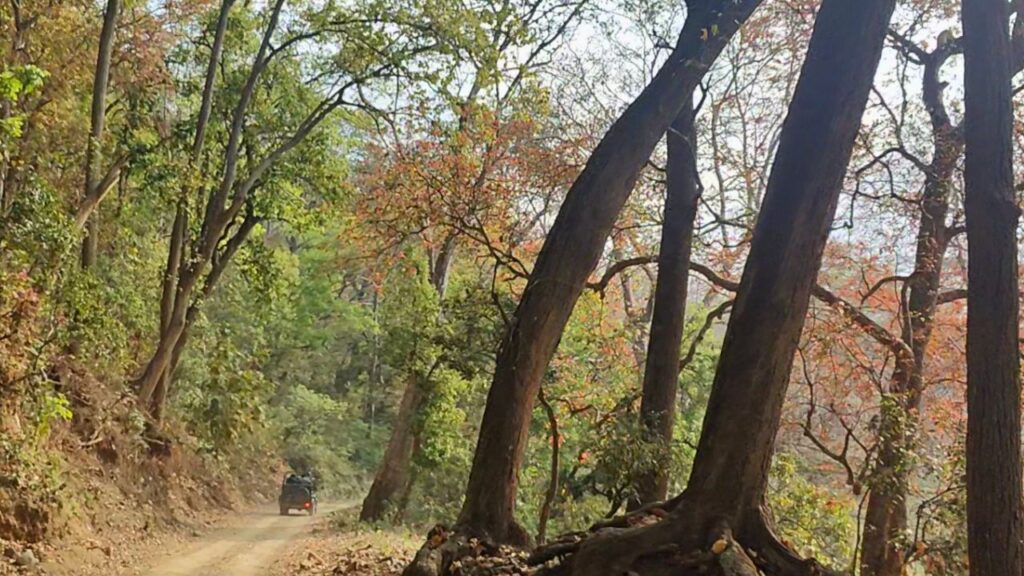
The wildlife in the Sitabani zone safari includes deer, elephants, leopards, wild boars, jackals, and, according to wildlife documentation, over 500 bird species. It is, by any reasonable definition, a serious wildlife habitat. It’s simply not the zone where the famous tiger photographs get taken.
There’s also something else about Sitabani that most safari write-ups skip entirely—something that turned out to be the most memorable part of our morning. But that comes later.
5:30 AM — Into the Forest
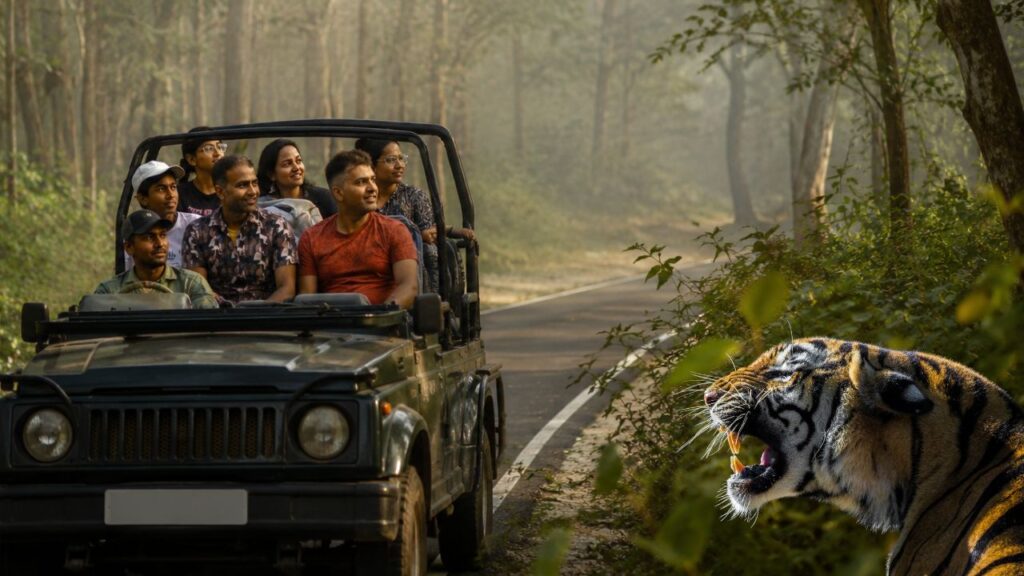
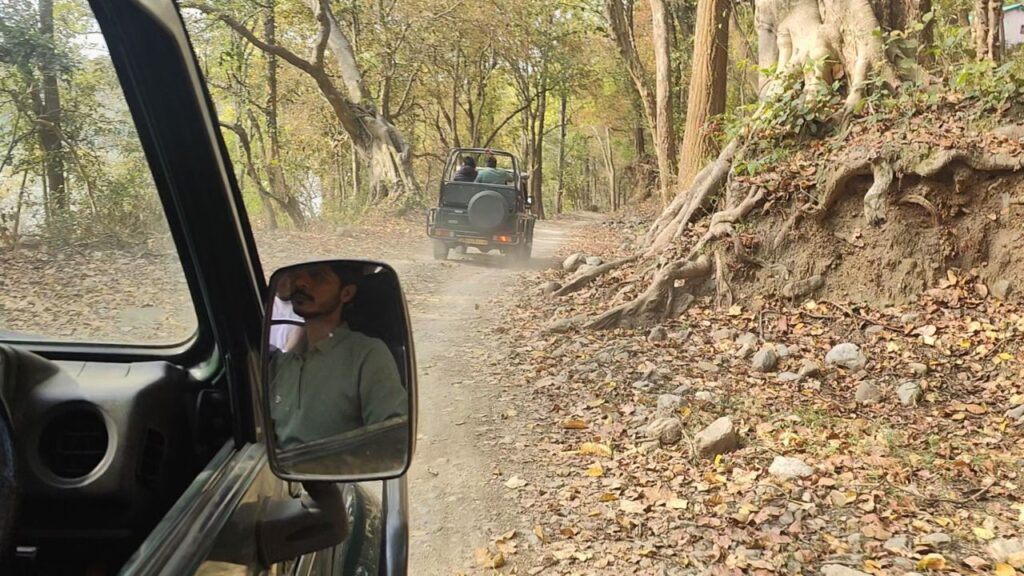
The open gypsy was waiting at the gate. Six of us loaded in, guide up front, driver already familiarized with the day. The cold hit immediately—that specific morning cold that an open vehicle in a forest multiplies considerably. Fleece or a light jacket is not optional in October through February. It feels optional until the Jeep starts moving.
The entry into the Sitabani forest is not gradual. One moment you’re on a road with context—resort signs, streetlights from somewhere, the edge of human settlement—and then the trees close in and that’s it. The light changes. Sound changes. The driver drops speed.
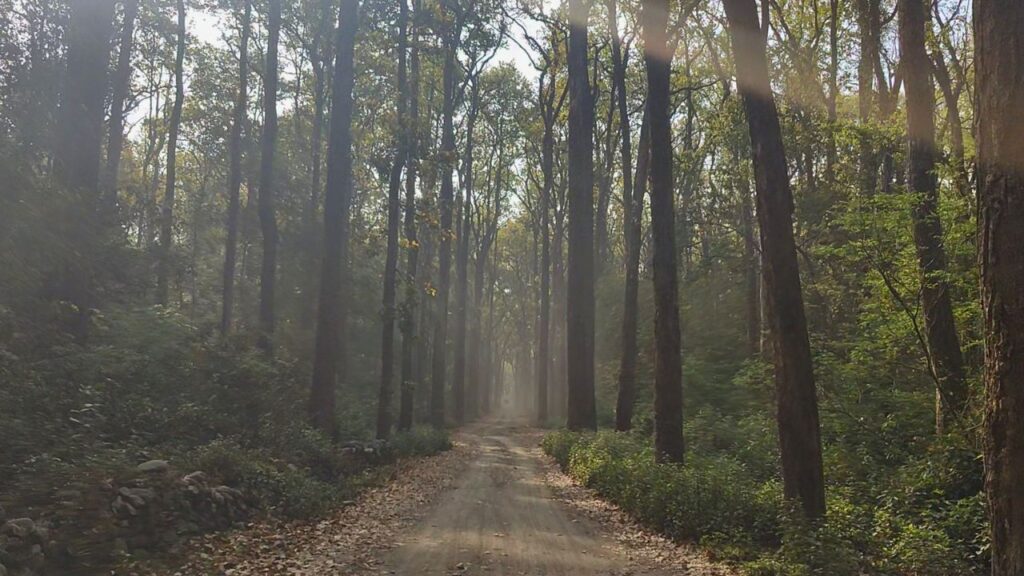
What you notice first in a jungle safari is silence. Not complete silence — the forest is never completely silent — but the absence of mechanical noise, of the particular texture that cities and towns have. What fills the space instead is birdsong, the sound of the jeep on uneven ground, and occasionally nothing at all.
The Sitabani forest in the early morning had mist in it. Not dramatic cinematic mist, but the real kind—low, patchy, the way moisture sits in dense vegetation when the temperature hasn’t yet climbed. It softened everything slightly. Made the forest look deeper than it was.
What We Saw — And What We Almost Saw
Deer. Early and often. Spotted deer in the undergrowth, sometimes individually, sometimes in small groups. They’re habituated enough to the jeep to hold their ground briefly before moving off, which gives you a proper look rather than a flash of movement.
Birds constantly flew—I couldn’t identify most of them, which is a gap in my knowledge I’m aware of. The guide could and did, pointing out species as we moved. If you’re a birder, the Sitabani zone safari in Jim Corbett will reward you properly.
And then—pug marks.
The guide had the driver stop. Got out; crouched; examined the road surface. Looked up the track. Looked back at us.
“Fresh,” he said. “Kaafi fresh hain. Woh nearby hai.”
Every camera came up. Every person went quiet. We sat in the jeep without speaking, looking into the treeline, for about fifteen minutes.
Nothing moved.
The guide said the tiger had probably moved off the road into the undergrowth. Common behavior. They hear the vehicle. They’re not frightened, exactly—tigers don’t really do frightened—but they’re not interested in being observed either. The pug marks were real. The tiger was, in some sense, present in that forest while we were present in it.
We just occupied different parts of it.
No Tiger — The Honest Reaction
I won’t dress this up: the moment you accept that the tiger isn’t coming is a real moment of deflation.
You’ve driven from wherever you’ve come from, paid for accommodation, paid for the safari, set a 5:30 alarm, sat in an open jeep in the cold—and the thing that the whole infrastructure is built around didn’t happen. That’s a specific feeling. It’s allowed to be disappointing. Anyone who tells you it doesn’t matter has either already seen plenty of tigers or is performing contentment.
What I can tell you honestly is that the disappointment fades faster than you expect.
Because somewhere around the ninety-minute mark of the safari, I stopped watching the treeline for orange and black and started just watching the forest. And the forest, it turned out, was doing quite a lot.
The way light moves through dense jungle in the early morning is a specific thing. It comes in shafts and patches, hitting particular leaves and branches and leaving others in shadow. It changes as you move — the jeep creates a constantly shifting relationship with where the light is coming from. At some point I stopped thinking about what I might see and started paying attention to what I was seeing.
A hornbill landing on a branch ten feet from the jeep. Deer are moving in single file through the undergrowth with a specific purposefulness that animals have when they’re going somewhere. A clearing where the grass was flattened in a wide circle — the guide said elephants had been here recently. The forest floor, when you look at it instead of the horizon, is full of information.
Three hours of this. Not three hours of waiting for a tiger. Three hours inside a real jungle in the early morning, which is a genuinely different thing from visiting one.
The Pug Marks and What They Actually Mean
Here is something I’ve thought about since.
We were in the same forest as a tiger. Same morning. Possibly within a few hundred meters at some point—the guide seemed fairly confident of that. The tiger was moving through its territory, doing whatever tigers do at 6 AM in the Sitabani zone, aware of us on some level, unbothered.
That’s not nothing.
The absence of a sighting is not the same as the absence of the animal. The forest we were in was genuinely occupied by one of the most significant predators on the planet. The fact that it didn’t choose to let us see it is, if you think about it from a different angle, a reminder that we were guests in its territory — not the other way around.
I find something clarifying about that. In most human environments, humans are in charge. The jungle is one of the few places where that’s genuinely not the case. A tiger that doesn’t want to be seen won’t be seen, regardless of permits and guides and expensive jeeps. There’s something honest about that.
Siteshwar Mahadev — The Part Nobody Mentions
Near the end of the safari, the guide asked if we wanted to see a temple.
A temple. In the middle of the jungle. On a safari.
We said yes.
What we found—and what I think is the most genuinely surprising thing about the Sitabani zone at Jim Corbett — was a temple complex inside the forest itself. Not adjacent to the forest, not at the edge. Inside it, surrounded by trees, accessed by a dirt track that the jeep navigated carefully.
Siteshwar Mahadev is a Shiva temple. Old stone. The sounds of the jungle on all sides.
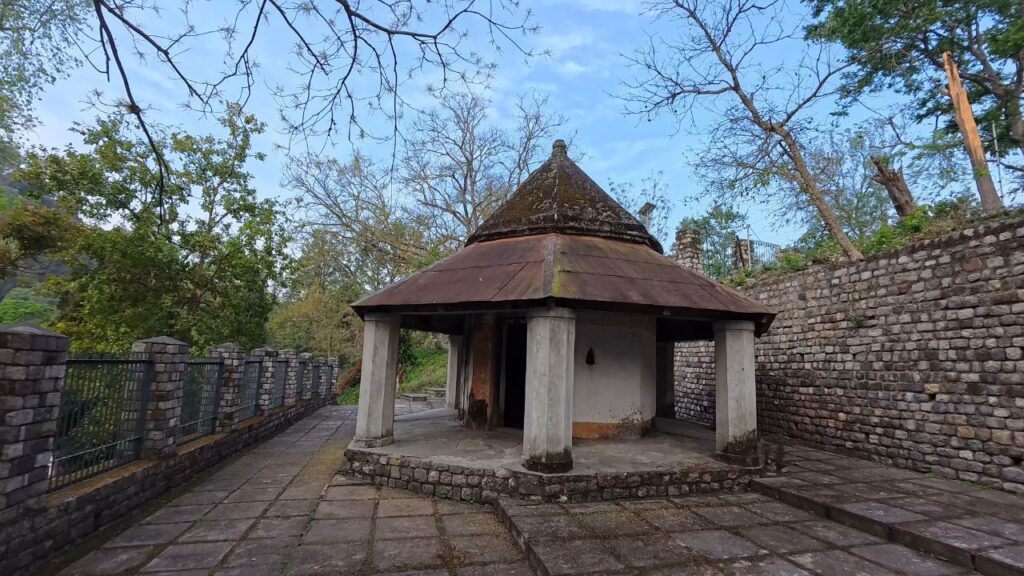
The guide explained the name. Sitabani—Sita’s forest. “Ban” meaning forest, “Sita” meaning exactly who you think. This forest, according to the Ramayana, is where Maa Sita spent part of her vanvaas—her exile with Lord Ram. She worshipped Lord Shiva here, in the form of Siteshwar Mahadev. This temple marks that site.
It is also said that Luv and Kush were born in this forest.
I stood in front of that temple for a few minutes and genuinely couldn’t process the layering of it. A wildlife safari in a forest that is also, in Hindu tradition, one of the most sacred places in the Ramayana. Pug marks of a tiger on the road outside and a Shiva temple inside. Thousands of years of mythology in the same forest where a real apex predator was moving through the undergrowth an hour earlier.
No other zone in Jim Corbett offers this. Just Sitabani. Just this forest where the tiger and the mythology occupy the same ground.
The Honest Verdict—Who Should Go to Sitabani Zone Safari
I promised honesty, so here it is clearly:
Go for the Sitabani zone safari if: You couldn’t get a core zone permit, and you want a real forest experience rather than staying at the resort. You’re interested in birds—Sitabani is exceptional for birdwatching. You want a more relaxed, less commercial safari experience without the permit pressure. Do you have any interest in the mythology of the Ramayana? Siteshwar Mahadev alone justifies the morning. You understand that a tiger sighting is always luck, not a guarantee, in any zone.
Manage your expectations if: Your sole purpose is tiger sighting, and you’ll measure the entire experience against that single outcome. Tiger sighting probabilities in Sitabani are genuinely lower than in core zones—that’s not a rumor, it’s structural. If the tiger is the only thing, book Dhikala or Bijrani, book early, and wait for a permit.
The TripAdvisor reviews: Most negative reviews come from people in the second category who ended up in the zone without fully understanding what it was. Their disappointment is legitimate, but their conclusion—that the zone itself is bad—conflates their expectation with the zone’s actual offering. Sitabani is not a failed Dhikala. It’s a different thing entirely.
Practical Notes for Sitabani Zone
Booking: No CTR permit required. Contact local operators or your resort — most can arrange Sitabani safari bookings with short notice. Jeep capacity is typically six passengers.
Timing: The morning safari starts around 6 AM. Duration approximately 3 hours. Evening safaris are also available and have their own quality—the forest in late afternoon light is different from morning.
What to wear: Layers. The morning cold in an open jeep is significant October through February. A light jacket, closed shoes, and something on your head if you’re sensitive to cold.
Binoculars: Genuinely worth carrying for Sitabani. The birdlife rewards proper magnification in a way that a jeep and camera don’t fully capture.
Siteshwar Mahadev temple: Ask your guide specifically to include it in the route. Not all safari operators include it automatically, but most will if you ask.
Best season: October to March. Monsoon sees the zone remaining open—one advantage over core zones, which close—but trails can be difficult, and wildlife movement is different.
What 5:30 AM Gave Us
We reached the resort at 9:30. Breakfast was waiting. Hot chai, plates of food, and the specific appetite that cold early mornings create.
We ate and talked about the safari the way you debrief an experience that was more complex than a simple thumbs up or thumbs-down. The tiger that left fresh pug marks. The hornbill on the branch. The clearing with flattened grass. The Shiva temple in the forest where Sita once walked.
No tiger. And still, an extraordinary morning.
That’s the honest truth about the Sitabani zone safari at Jim Corbett. It won’t give you a guarantee. It will give you a forest, a mythology, and three hours that are difficult to fully explain to someone who wasn’t there.
Sometimes that’s exactly enough.